
Dental Veneers in Houston, TX

A Complete Smile Correction in as Few as Two Visits
One Treatment, Multiple Concerns Addressed
Discoloration that does not respond to whitening, chips, gaps, uneven lengths, and worn edges can all be resolved in a single veneer treatment plan. For patients with a list of things they want to change, veneers often accomplish more in less time than any other cosmetic option.
Results That Look Like You
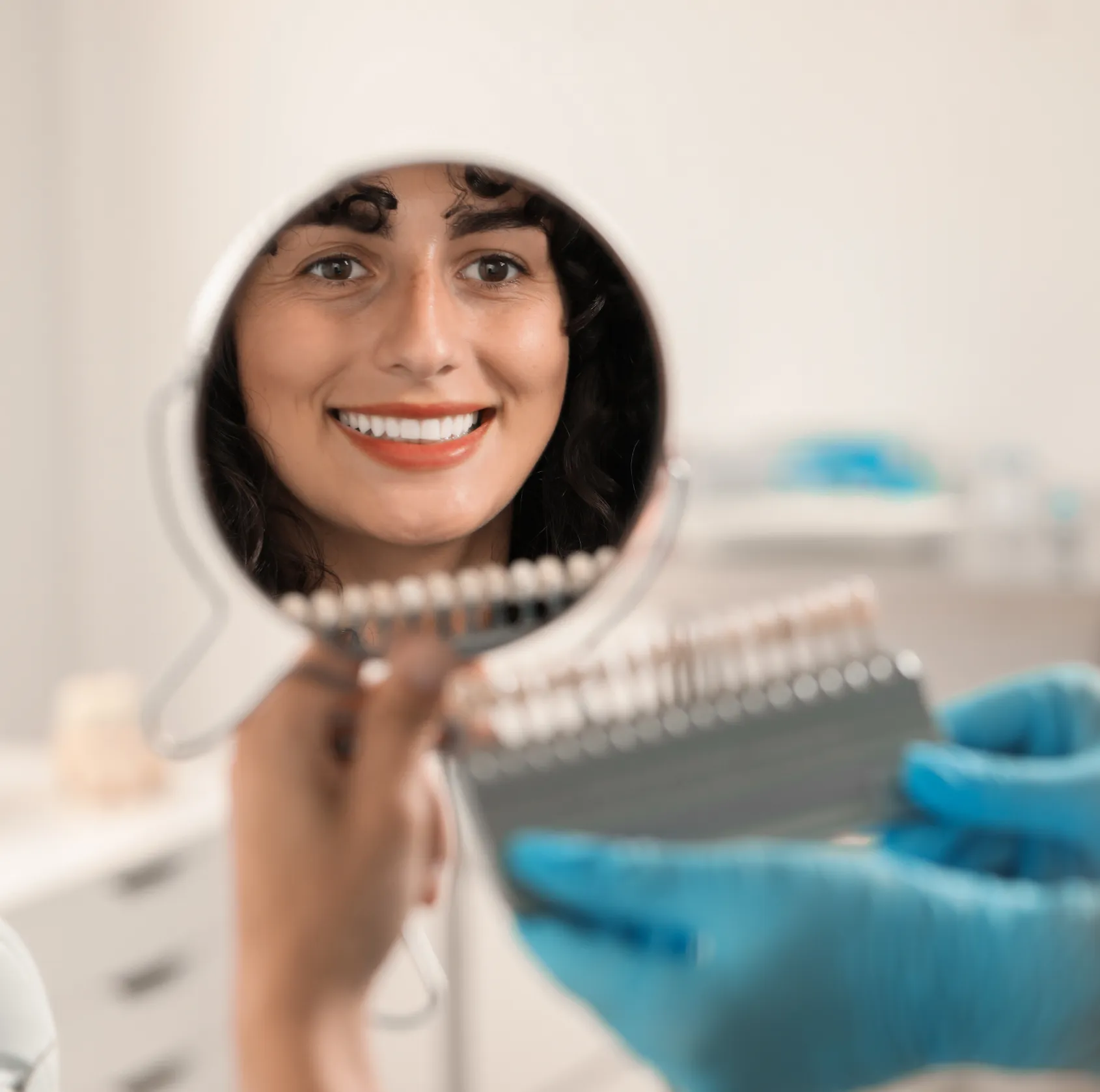
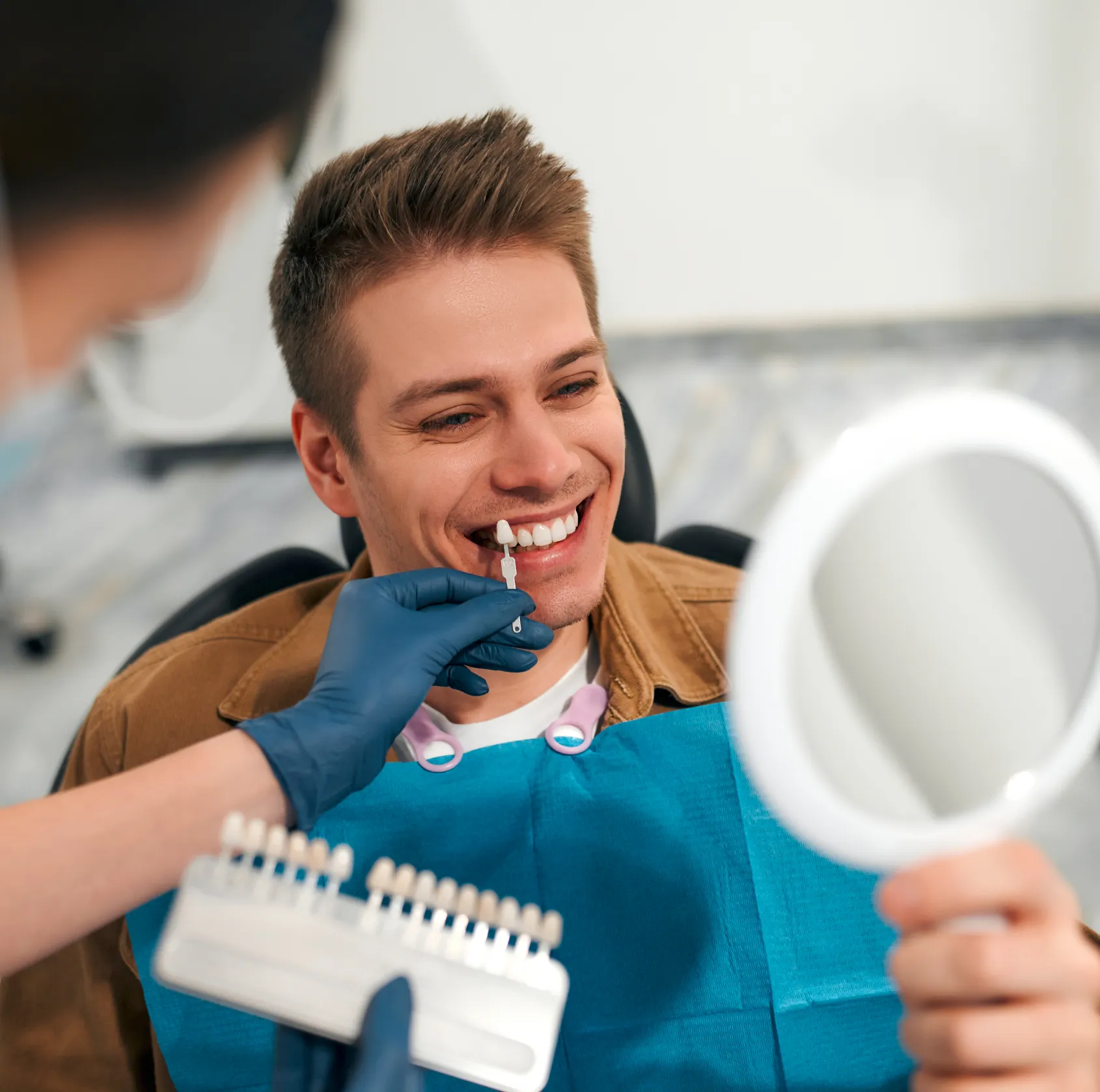
Dr. Jeong selects the shade, shape, and translucency of each veneer based on your skin tone and the natural proportions of your teeth. The goal is a result that looks like the best version of your smile, not like dental work.
Minimally Invasive Options Are Available
No-prep and minimal-prep veneers preserve more natural enamel and are reversible in some cases. Dr. Jeong evaluates whether your goals can be achieved with a conservative approach before recommending anything that permanently alters the tooth surface.
We've got your
coverage covered
When Veneers Are Not the Right Starting Point
Veneers are a cosmetic solution, not a restorative one. Before placement can happen, the following need to be addressed:
- Active decay or gum disease
- Significant bite issues that would affect how the veneers sit and function
- Heavy grinding or clenching, which puts porcelain restorations at risk of fracture without a night guard in place
Dr. Jeong evaluates all of this before any cosmetic treatment is planned so your investment is protected from the start.

Choosing the Right Material
The material used for your veneers affects how they look, how long they last, and how much preparation your teeth require. At Nest Dental, Dr. Jeong selects from the following based on your specific case:
Porcelain
The most natural-looking option. Highly stain-resistant, reflects light similarly to natural enamel, and extremely durable. Requires a small amount of tooth reduction before placement.
Lithium disilicate ceramic
A high-strength ceramic with excellent aesthetics and durability. Well suited for patients who want a balance of strength and natural appearance, particularly on teeth that absorb significant biting force.
Composite resin
Applied directly to the tooth in a single visit without the fabrication process required for porcelain or ceramic. More affordable and easier to repair if chipped, but less durable and more prone to staining over time.
Dr. Jeong discusses the advantages and limitations of each material in the context of your specific teeth and goals so you can make an informed decision.
How to Make Your Veneers Last
Veneers are durable, but they are not indestructible. Protecting your investment means:
- Wearing a custom night guard if you grind or clench your teeth
- Avoiding biting hard objects like ice, fingernails, or hard candy directly on the veneers
- Maintaining consistent oral hygiene to keep the margins clean and gum tissue healthy
- Coming in for regular cleanings so early signs of wear or marginal staining are caught before they become larger problems
- Scheduling periodic whitening for your natural teeth if needed to keep surrounding teeth matched to your veneer shade
With proper care, porcelain and ceramic veneers typically last 10 to 15 years or longer.


Meet Dr. Jenny Jeong & Dr. Justin Kang
A Family Team
of Experts
What to Expect When You Choose Veneers
Consultation and Smile Assessment
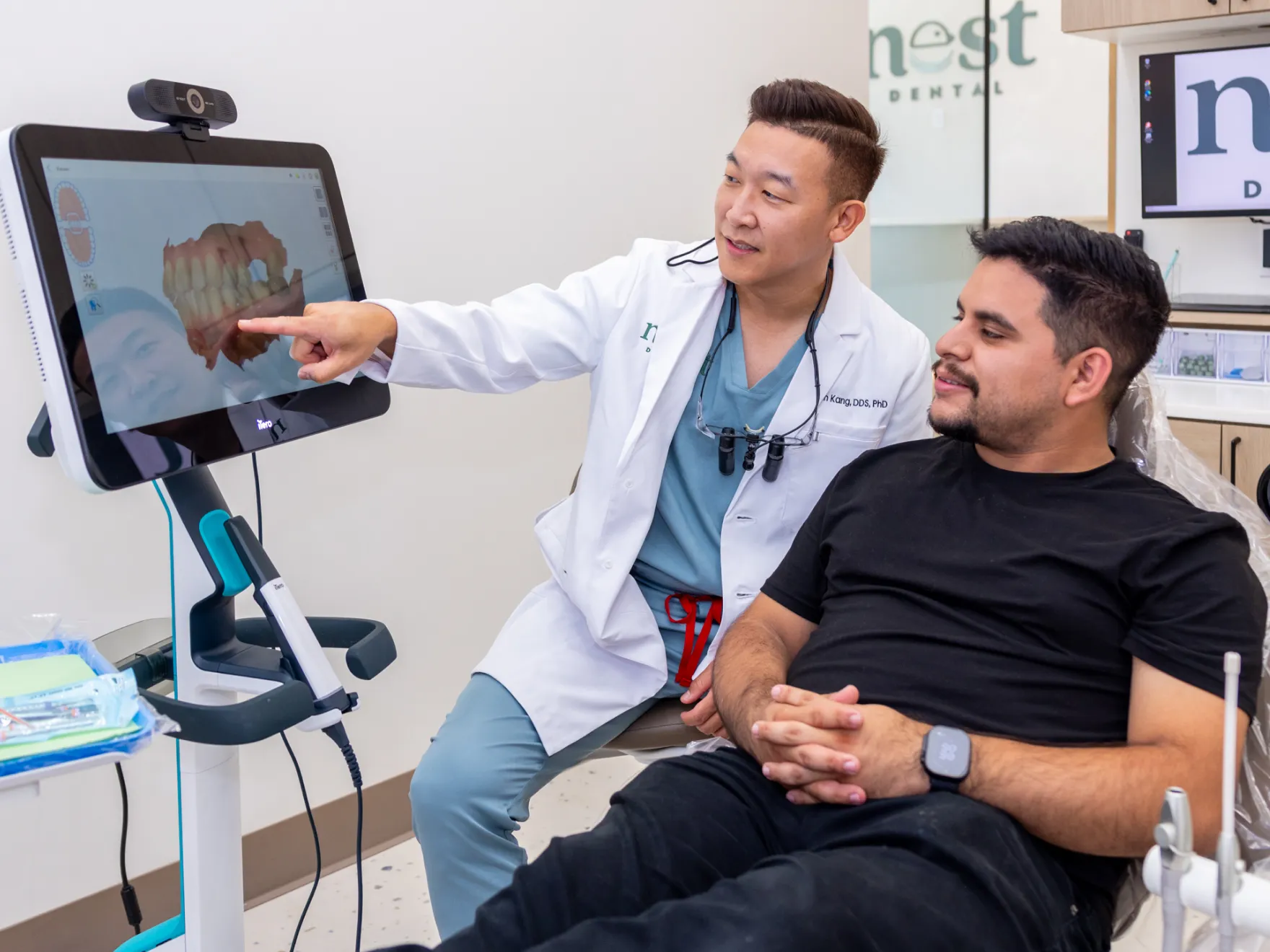
Dr. Jeong examines your teeth, reviews your bite, and listens to what you want to change. She uses the intraoral camera to show you your teeth on a chairside screen and discusses which veneer option is most appropriate for your situation. If digital photographs or a scan would help map the planned result, those are taken at this stage.
Treatment Planning
Dr. Jeong outlines the full treatment plan, including how many veneers are recommended, which material is appropriate, what preparation is involved, and what the sequencing looks like. If any preparatory work is needed, such as whitening, gum contouring, or bite adjustment, that is scheduled before veneer preparation begins.
Preparatory Work (If Needed)
Whitening is completed before veneers are fabricated so the shade of your natural teeth can be matched to your new restorations. Any other preparatory treatment is completed and allowed to stabilize before moving forward.
Tooth Preparation
A small, precise amount of enamel is removed from the surface of each tooth receiving a veneer. This creates space for the veneer to sit flush with the surrounding teeth and bond securely. Local anesthetic is used throughout. For no-prep cases, this step involves little to no reduction.
Digital Scan and Temporary Veneers
A digital scan of your prepared teeth is taken to guide fabrication of your permanent veneers. Temporary veneers are placed to protect the prepared teeth and give you a preview of your new smile while your restorations are being made.
Review of Temporaries
Before your permanent veneers are finalized, Dr. Jeong checks in about how your temporaries look and feel. If adjustments to shape, length, or proportions are needed, they are communicated to the lab before the permanent restorations are completed.
Permanent Veneer Placement
When your veneers are ready, you return for placement. Each veneer is checked individually for fit, shade, and shape before bonding. Once Dr. Jeong and you are both satisfied with the result, the veneers are permanently bonded, polished, and your bite is checked and adjusted as needed.
Follow-Up
A follow-up visit confirms that the veneers have settled correctly, your bite feels comfortable, and the gum tissue around the restorations is healthy. Dr. Jeong reviews your long-term care plan and answers any remaining questions.
What sets nest dental apart

You’re Safe Here

Local Team, Local Care

Higher Standards

A Better Experience
Frequently Asked Questions
How many veneers do I need?
That depends on how many teeth are visible when you smile and which ones you want to address. Some patients need two to four veneers to correct a single area of concern. Others want a full smile redesign across eight to ten teeth. Dr. Jeong maps out which teeth are in your smile line and discusses how many veneers would achieve a balanced, natural-looking result.
What is the difference between veneers and bonding?
Bonding uses composite resin applied directly to the tooth to correct isolated chips, gaps, or minor shape issues. It is completed in one visit and requires no tooth preparation in most cases. Veneers involve custom-fabricated restorations that cover the entire visible surface of the tooth and address more significant changes in color, shape, or alignment. Bonding is more conservative. Veneers are more comprehensive.
Can I get veneers if I grind my teeth?
Grinding significantly increases the risk of veneer fracture, particularly with porcelain. It does not automatically disqualify you, but it does mean a custom night guard is a required part of your treatment plan to protect the restorations. Dr. Jeong evaluates the severity of your grinding before recommending which material is appropriate for your case.
What happens if a veneer chips or breaks?
Composite veneers can often be repaired chairside. Porcelain and ceramic veneers that chip or fracture typically need to be replaced, since bonding material does not adhere to the surface of fired porcelain in the same way. Contact us as soon as possible if a veneer is damaged.
Can veneers be whitened?
No. Porcelain and ceramic veneers do not respond to whitening agents. This is why whitening is completed before veneers are placed, so your natural teeth can be brought to your desired shade and the veneers can be matched to it. If your natural teeth stain over time, whitening can bring them back to match your veneer shade.
Does getting veneers hurt?
Tooth preparation is performed under local anesthetic, so you should not feel discomfort during the procedure. Some patients experience mild sensitivity after preparation while the temporaries are in place. Once the permanent veneers are bonded, most patients adjust quickly and notice no lasting sensitivity.
Do veneers look fake?
Not when they are designed well. The shade, shape, and translucency of each veneer are selected to complement your face and blend with your surrounding teeth. The goal at Nest Dental is a result that looks like a naturally great smile, not an obvious cosmetic procedure.
Are veneers permanent?
Traditional veneers require the removal of a small amount of enamel, which makes the process irreversible. The tooth will always need to be covered by a restoration going forward. No-prep veneers involve little to no enamel removal and may be reversible in some cases. Dr. Jeong explains the long-term commitment clearly before you decide.
How long do veneers last?
Porcelain veneers typically last 10 to 15 years or longer with proper care. Composite veneers have a shorter lifespan, generally 5 to 7 years, but are more easily repaired if chipped. Longevity depends on the material, oral hygiene habits, and whether you grind or clench your teeth.
Located next to Starbucks and across the street from Kroger.
Visit nest dental in Houston’s Energy Corridor
We’re located near the heart of the Energy Corridor, next to Starbucks and across the street from Kroger, with free parking and Saturday appointments available. New patients and families welcome.