
Dental Implants in Houston, TX
Find Out If Dental Implants Are Right for You!
Not sure if you are a candidate? Answer a few quick questions and we will help point you in the right direction.

New Patient Special
The Only Tooth Replacement That Works From the Root Up
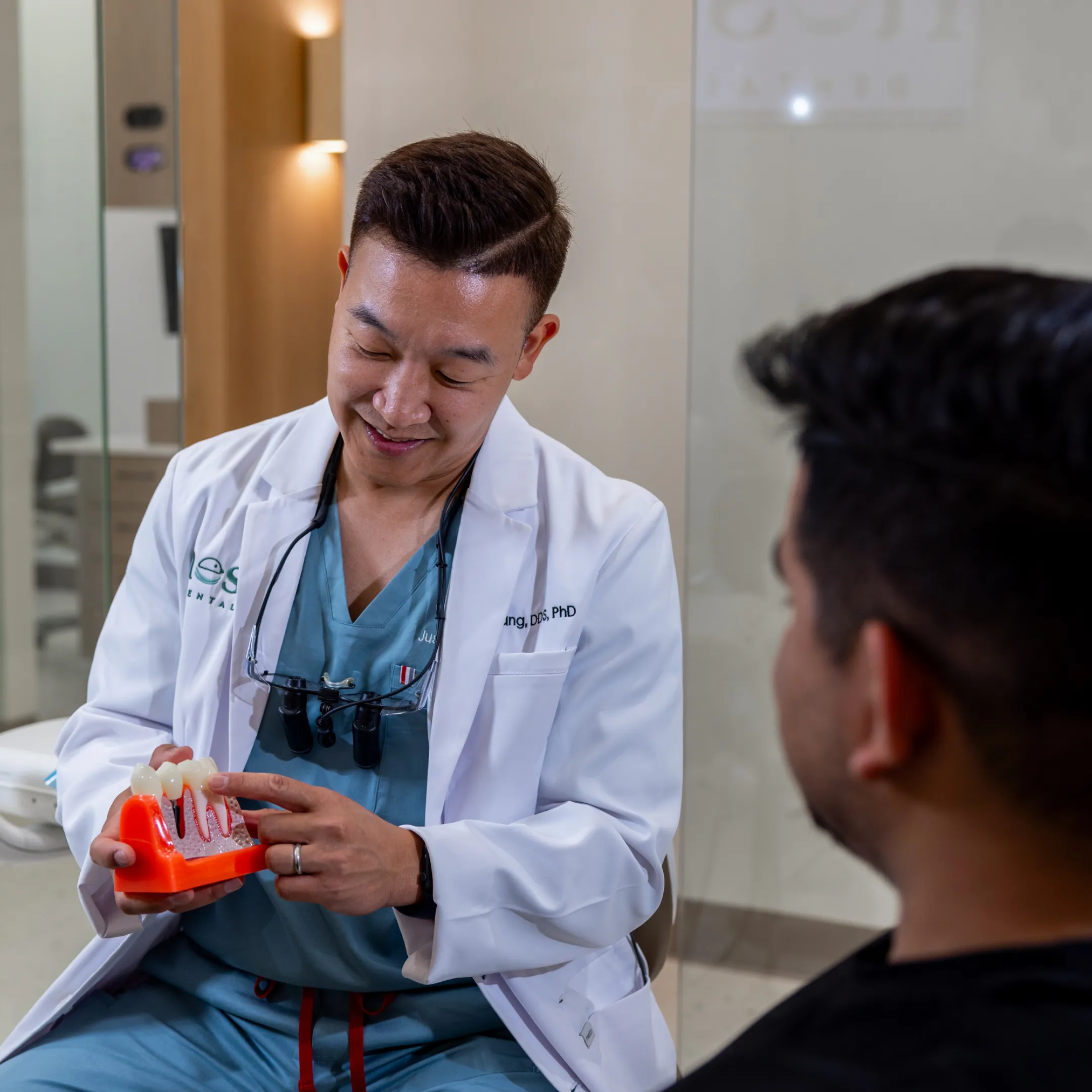
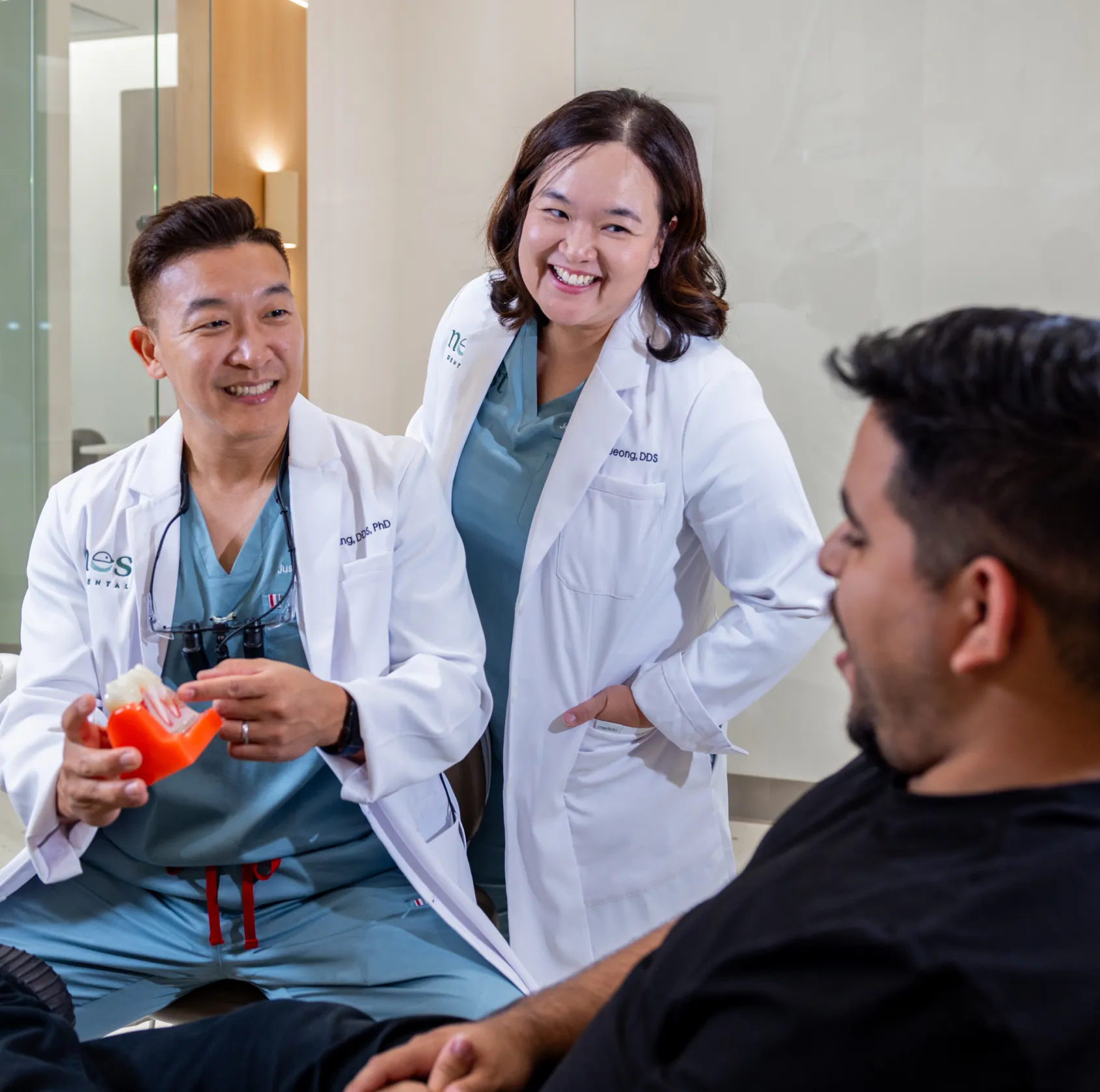
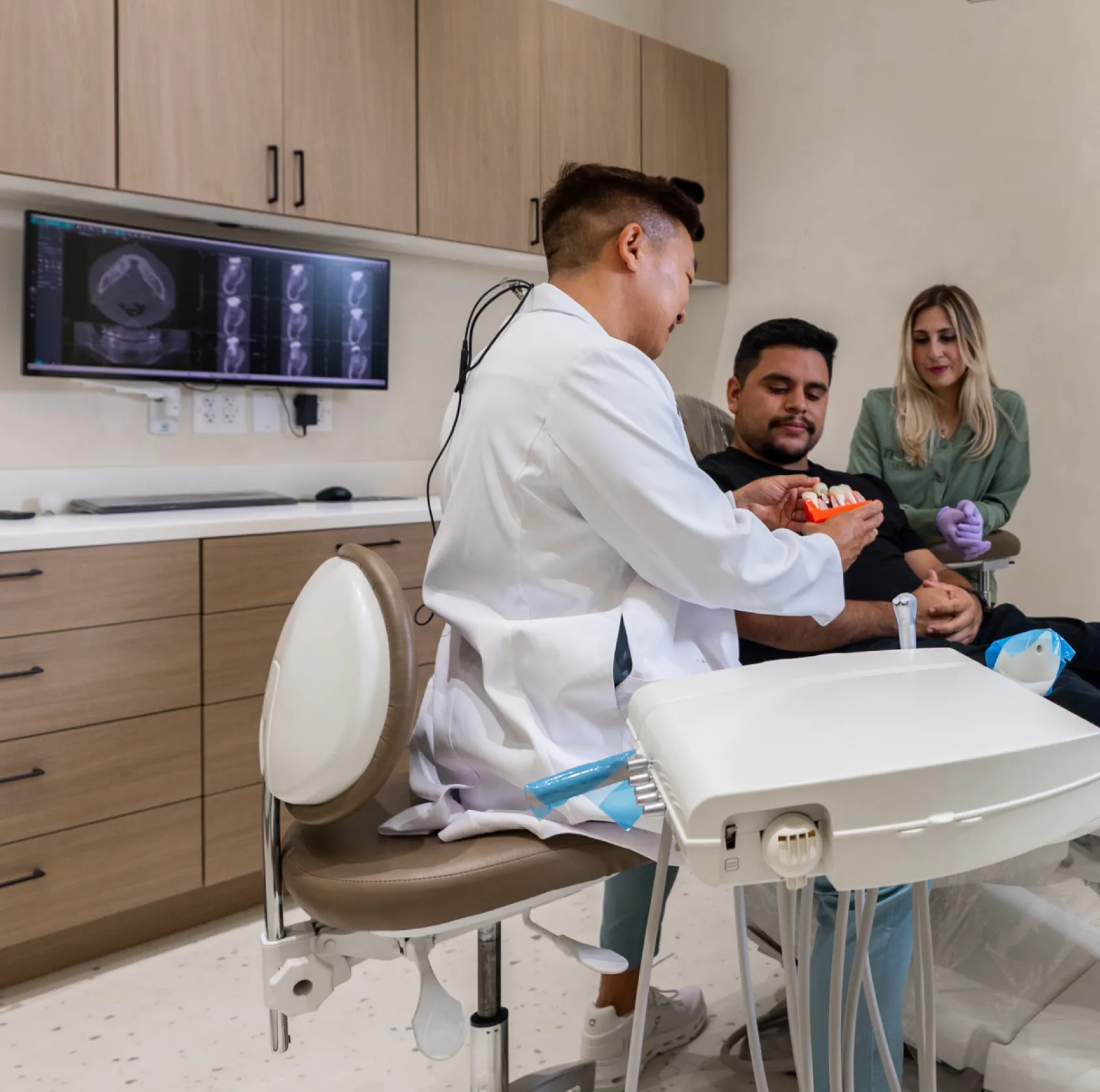
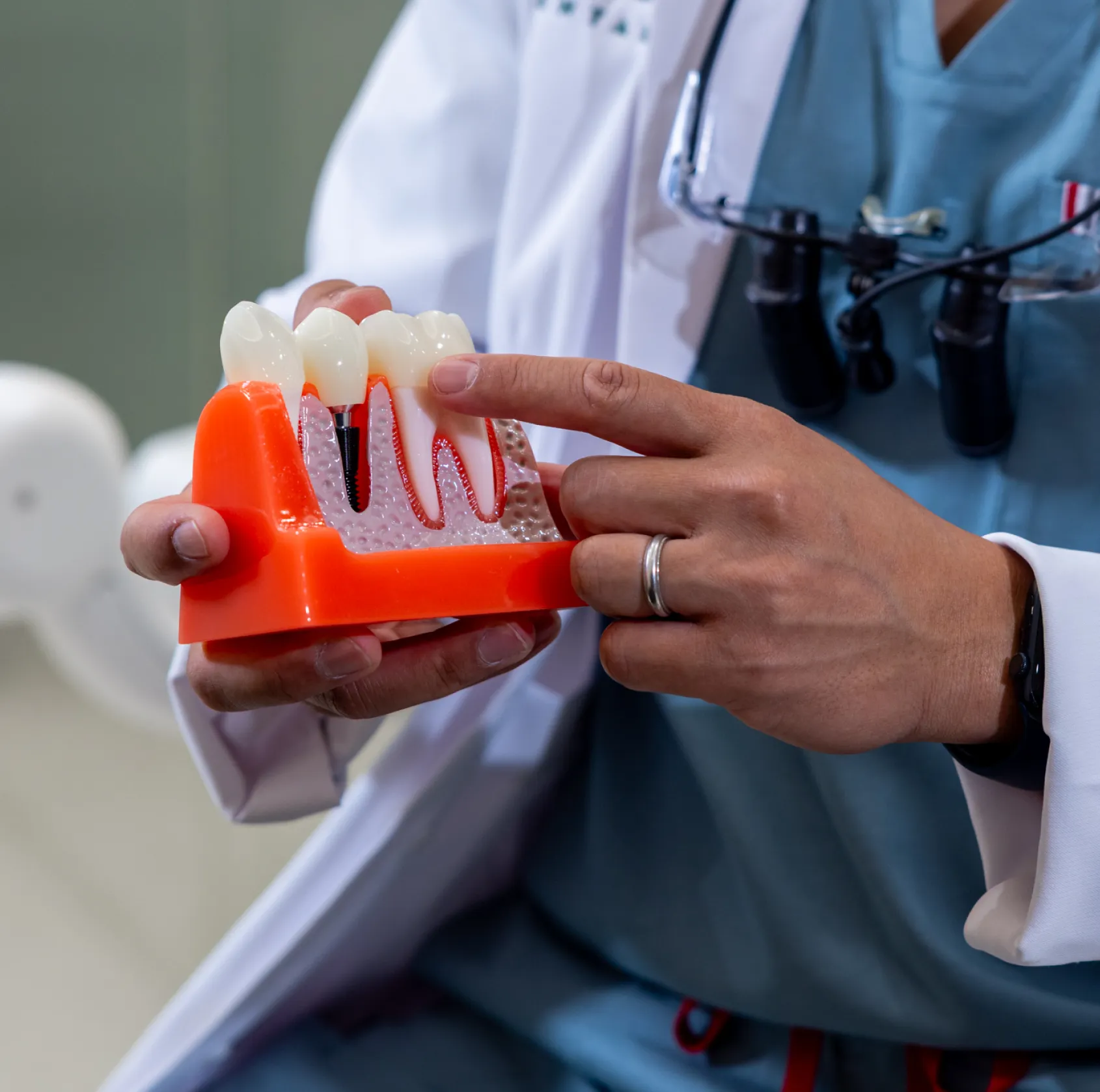
A dental implant is a titanium post placed into the jawbone that acts as an artificial root. Once it integrates with the bone, a custom crown attaches on top to replace the visible tooth. Dr. Justin Kang places every implant at Nest Dental using the Hiossen implant system and CBCT imaging to plan each case in full before treatment begins.
For patients replacing multiple teeth or a full arch, implant-supported dentures anchor a complete restoration to implants rather than relying on suction or adhesive.

It Functions Exactly Like a Natural Tooth
An implant is the only restoration that stands on its own, rooted in the bone, with no dependency on neighboring teeth and no movement. You chew on it, brush it, and forget it is there.
It Protects the Bone Underneath
When a tooth is lost, the jawbone in that area deteriorates without a root to support it. An implant is the only restoration that stimulates the bone the way a natural root does, preventing the bone loss and facial changes that follow tooth loss over time.
It is the Last Restoration You Will Need
A well-placed implant can last decades. Bridges typically need replacement every 10 to 15 years. Dentures require ongoing relining and adjustment as the bone beneath them changes. An implant eliminates that cycle entirely.
We've got your
coverage covered
Why Implant Planning Matters as Much as Placement
Thorough planning is what separates a successful implant from a complicated one. Before every procedure, Dr. Kang uses CBCT imaging to map:
- Bone density and available volume at the implant site
- Nerve location and proximity to the planned placement
- Sinus anatomy for upper jaw cases
- The precise angle, position, and depth for safe, stable placement
Patients who receive implants placed without this level of pre-treatment evaluation face a higher risk of nerve involvement, implant failure, and complications requiring corrective surgery.
When Bone Grafting Is Part of the Process
Not every patient has enough bone volume to support an implant right away. Bone loss is common when:
- A tooth has been missing for an extended period
- The tooth was extracted without socket preservation
- Gum disease has caused bone deterioration over time
When the available bone is insufficient, a graft rebuilds the site before placement. Dr. Kang performs bone grafting in-house, so you are not referred out for a procedure that is a direct part of your implant plan. Once the graft integrates and the site has adequate volume, implant placement can proceed.

When a Tooth Is Extracted, and an Implant Is Planned
When a tooth needs to come out, and an implant is the intended replacement, the sequencing of treatment matters:
- In some cases, an implant can be placed after the extraction site has fully healed
- In others, a bone graft is placed at the time of extraction to preserve the socket and prepare it for a future implant
- The right approach depends on the condition of the bone, the reason for extraction, and your overall treatment plan
Dr. Kang evaluates each case individually and walks you through the full sequence before anything begins.
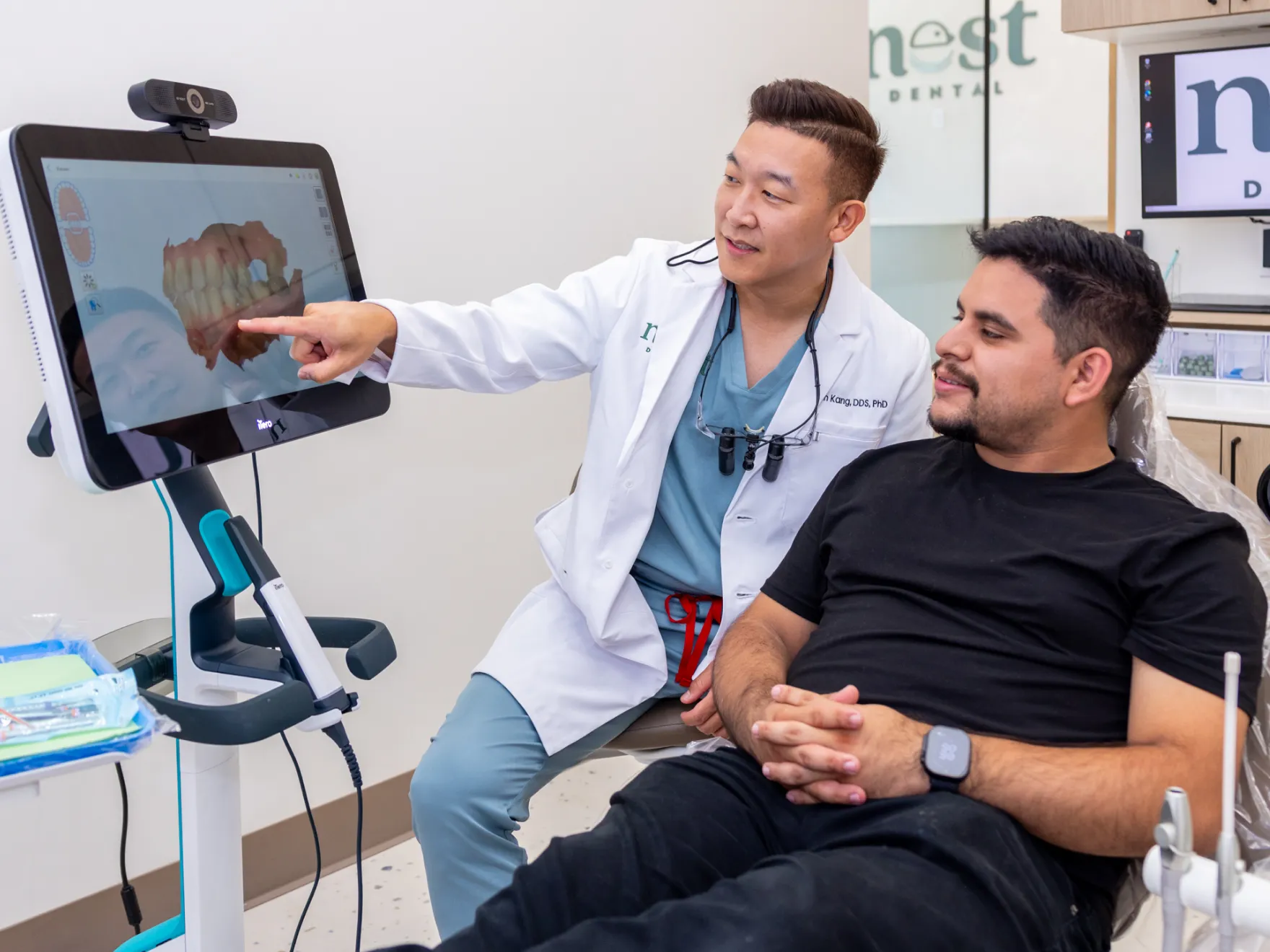
Implant-Supported Dentures
Traditional dentures sit on the gum and shift during eating and speaking. They also contribute to ongoing bone loss because they do not stimulate the jaw. Implant-supported dentures attach directly to implants placed in the jaw, which means:
- No movement during eating or speaking
- Significantly improved chewing function compared to conventional dentures
- Preserved bone structure over time
They come in two configurations:
- Fixed: Permanently attached to the implants, removed only by a provider. Functions closest to natural teeth.
- Removable: Snaps onto the implants for stability during the day, removed at night for cleaning. More affordable than fixed, while still far more stable than traditional dentures.
Dr. Kang evaluates your bone structure, the extent of tooth loss, and your long-term goals to recommend the option that fits your situation.


Meet Dr. Jenny Jeong & Dr. Justin Kang
A Family Team
of Experts
What to Expect During Implant Treatment
Complimentary Consultation
Dr. Kang reviews your dental and medical history, examines the affected area, and discusses your goals and options. This is a conversation, not a sales pitch.
CBCT Imaging and Treatment Planning
A full 3D scan maps your bone structure, nerve pathways, and implant site anatomy. Dr. Kang uses this to plan the exact position, angle, and depth of your implant. If bone grafting is needed, it is identified and discussed here.
Bone Grafting (If Required)
If the site lacks sufficient bone volume, a graft is placed and allowed to integrate before implant placement. Healing time varies depending on the size of the graft. Dr. Kang gives you a realistic timeline based on your imaging.
Implant Placement
The implant post is placed into the jawbone under local anesthetic. Laughing gas is available for patients who want additional help staying relaxed. The appointment typically takes one to two hours, depending on case complexity.
Healing and Fusion
The implant fuses with the surrounding bone over the following months. Most patients experience minimal disruption during this period and can continue normal activity with some dietary modifications.
Abutment Placement
Once fusion with the jawbone is confirmed, a small connector piece is attached to the implant. This is what the crown or denture will secure to. In some cases, the abutment is placed at the same time as the implant.
Final Restoration
A custom crown is designed to match the shape, size, and shade of your surrounding teeth and is attached to the abutment. For implant-supported dentures, the restoration is fitted, adjusted for bite and comfort, and secured.
Follow-Up
You return to confirm healing, check the restoration, and address any questions. Routine checkups going forward will monitor the implant and the surrounding bone over time.
What sets nest dental apart

You’re Safe Here

Local Team, Local Care

Higher Standards

A Better Experience
Frequently Asked Questions
Does insurance cover dental implants?
Coverage varies widely. Some plans include partial coverage for the crown or the surgical procedure. Many classify implants as elective and do not cover them. Our front desk team can help you review your benefits before your consultation. CareCredit financing and our in-house membership plan are also available to help make treatment more accessible.
Is bone grafting always necessary before an implant?
No. Patients with sufficient bone volume at the implant site do not need grafting. It becomes necessary when significant bone loss has occurred due to a missing tooth, gum disease, or trauma. Your CBCT scan determines whether grafting is part of your treatment plan.
What is the difference between a fixed and removable implant-supported denture?
A fixed implant-supported denture is permanently attached and removed only by a provider. A removable option snaps onto the implants for daytime stability and is taken out at night. Both are significantly more stable than traditional dentures. Dr. Kang helps you determine which fits your anatomy, budget, and lifestyle.
Can I get an implant if I have had a tooth missing for years?
Possibly. Bone loss is likely if the tooth has been missing for an extended period, which may require grafting before an implant can be placed. Dr. Kang evaluates the site with CBCT imaging and tells you exactly what is needed.
How do I care for a dental implant?
The same way you care for natural teeth. Brush twice daily, floss daily, and come in for regular cleanings and checkups. The implant itself cannot decay, but the gum tissue and bone around it can be affected by poor hygiene.
What is the success rate of dental implants?
Dental implants have a success rate of approximately 95 percent or higher in healthy patients when placed by an experienced provider following thorough pre-treatment planning. The quality of planning, placement technique, and post-placement care all affect long-term outcomes.
What is osseointegration and why does it take so long?
Osseointegration is the process by which the implant fuses with your jawbone. The bone grows around and into the surface of the titanium post, creating the stability that makes it function like a natural root. This biological process cannot be accelerated, and moving forward before it is complete compromises the outcome.
How long does the entire implant process take?
A straightforward single implant without grafting can be completed in three to six months from placement to final crown. Cases requiring bone grafting take longer. Dr. Kang gives you a realistic timeline at your consultation based on your imaging.
Does implant surgery hurt?
The area is fully numbed before placement begins. Most patients report feeling pressure, not pain. Laughing gas is available for patients who want additional help staying relaxed. Post-procedure soreness is typically manageable with over-the-counter pain relief and resolves within a few days.
Am I a candidate for dental implants?
Most adults with good general health and sufficient jawbone are candidates. Conditions like uncontrolled diabetes, active gum disease, or heavy smoking can affect healing and implant success. Dr. Kang reviews your full health history at your consultation and gives you a direct answer.
Located next to Starbucks and across the street from Kroger.
Visit nest dental in Houston’s Energy Corridor
We’re located near the heart of the Energy Corridor, next to Starbucks and across the street from Kroger, with free parking and Saturday appointments available. New patients and families welcome.